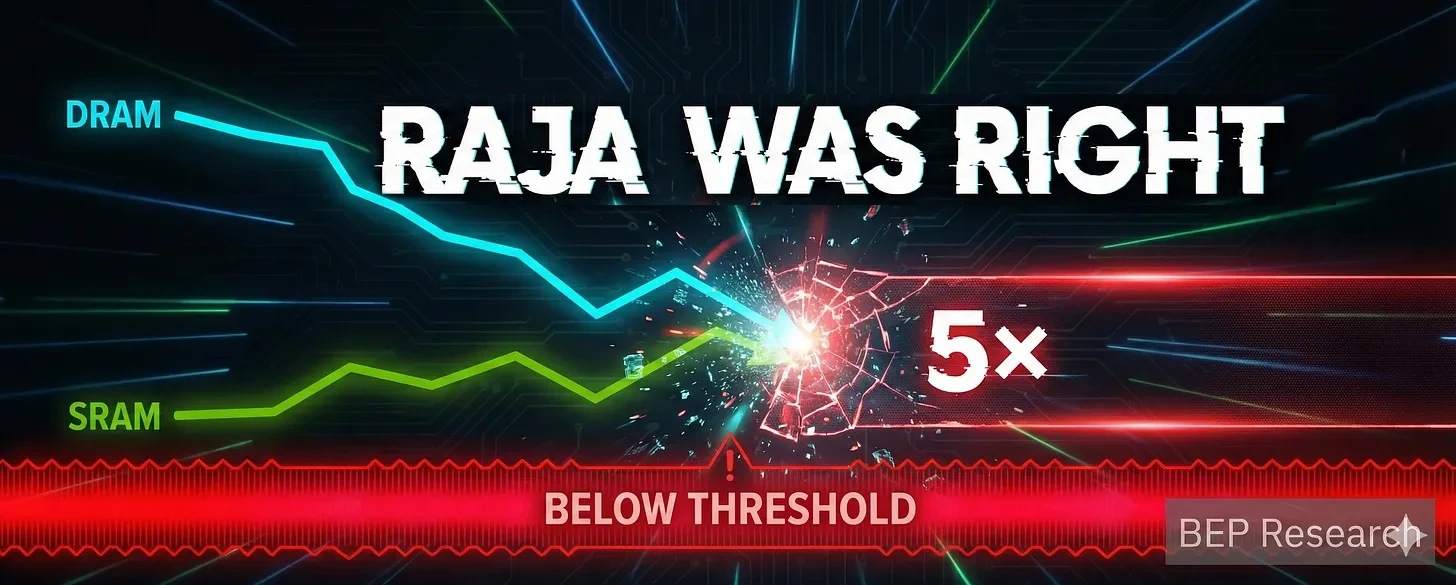
In February 2024, Raja Koduri put a clear prediction into the public record.
He said this: if the DRAM to SRAM cost ratio compresses far enough, chip architects will face forced design decisions. Once made, those decisions lock in for years due to long silicon cycles.
Most people scrolled past. Ben Pouladian did not.
Ben followed the math. He tracked memory pricing, supply pressure, and design timelines. His Substack series, The Memory Cost Reckoning, shows why the memory wall no longer lives in theory. Memory economics now shape architecture, roadmaps, and competitive position through the end of the decade.
What stood out
- The DRAM versus SRAM cost curve drives architecture choices
- Latency and bandwidth now tie directly to dollars per token
- Energy per token follows memory placement
- Multi-year silicon timelines turn pricing shifts into long-term outcomes
Raja did not speak in abstractions. He pointed to a measurable threshold and a clear consequence. Ben validated it with data.
Why this matters at OXMIQ
At Oxmiq Labs, this mindset guides how we work every day. We are watching memory economics reshape the entire AI stack. When memory hierarchies flip, architectures change, and competition resets.
Raja constantly weighs latency against bandwidth. Cost against performance. Energy against scale. He thinks about what happens when pricing signals collide with long silicon cycles. That combination of long-cycle industry experience, systems thinking, and willingness to rethink the stack from the ground up is exactly what makes OXMIQ's approach different.
The memory wall is no longer only about engineering limits. Cost and supply now drive the outcome. The real question is: who is designing for this reality?